INTERVIEW WITH DR. MONTY W. JONES
FOSTERING INTERCULTURALITY IN THE INTERNATIONALIZATION OF GRADUATE PROGRAMS IN EDUCATION
DOI:
https://doi.org/10.17564/2316-3828.2025v13n1p1-12eKeywords:
EDUCATION, GRADUATE PROGRAMS, INTERVIEW, DR. MONTY W. JONES
Published
Downloads
Issue
Section
License

This work is licensed under a Creative Commons Attribution-NonCommercial 4.0 International License.
A Revista oferece acesso livre e imediato ao seu conteúdo, seguindo o princípio de que disponibilizar gratuitamente o conhecimento científico contribui para a democratização do saber. Assume-se que, ao submeter um artigo, o(a) autor(a) se reconhece como detentor(a) do direito autoral sobre ele e autoriza seu livre uso pelos leitores, podendo ser, além de lido, baixado, copiado, distribuído e impresso.Abstract
Internationalization activities in Graduate Programs (PPG) in Brazil have been constantly emerging since 2005. They were systematically implemented through the Fifth National Graduate Program Plan (PNPG), which was created by the Coordination for the Improvement of Higher Education Personnel (CAPES). However, these activities were only expanded after 2011 thanks to the Sixth PNPG and the creation of the Science Without Borders Program, according to Valero-Ribeiro-Saes and Invernizzi (2023). Although undergraduate degrees were the priority of the Science Without Borders Program, graduate studies also benefited from this program through scholarship offerings such as the Sandwich Doctorate, Full Doctorate, Post-Doctorate, Professional Master’s, and Technological Development programs. Such an internationalization policy was of great importance for the scientific and technological development in Brazil, as it enabled the academic mobility of students and professors to countries in the Global North and South.
Currently, graduate programs have different forms of funding to carry out internationalization activities, especially after the creation of the CAPES-PrInt Institutional Internationalization Program in 2018 for graduate programs classified as excellent. Each PPG has sought ways to promote internationalization in its Strategic Planning since then. At the Federal University of Sergipe (UFS), the Graduate Program in Education (PPGED) has been investing in an internationalization process through the annual opening of calls for funding of technical visits by faculty members to foreign universities, aiming to strengthen research actions, technical cooperation, and expand networks among researchers. The PPGED/UFS calls are funded with resources received from CAPES through the Graduate Support Program (PROAP). Thus, faculty members are selected to carry out working missions or technical visits to a foreign university every year.
One of these universities is the Virginia Commonwealth University (VCU) in Richmond, Virginia, United States, which has signed a memorandum of understanding with the Federal University of Sergipe. Since 2022, PPGED students have participated in academic mobility to VCU via Sandwich Doctorate programs funded by CAPES scholarships. The University of Waterloo, in Canada, and the University of Madeira, in Portugal, are also partner institutions which PPGED students have visited during their doctoral studies.
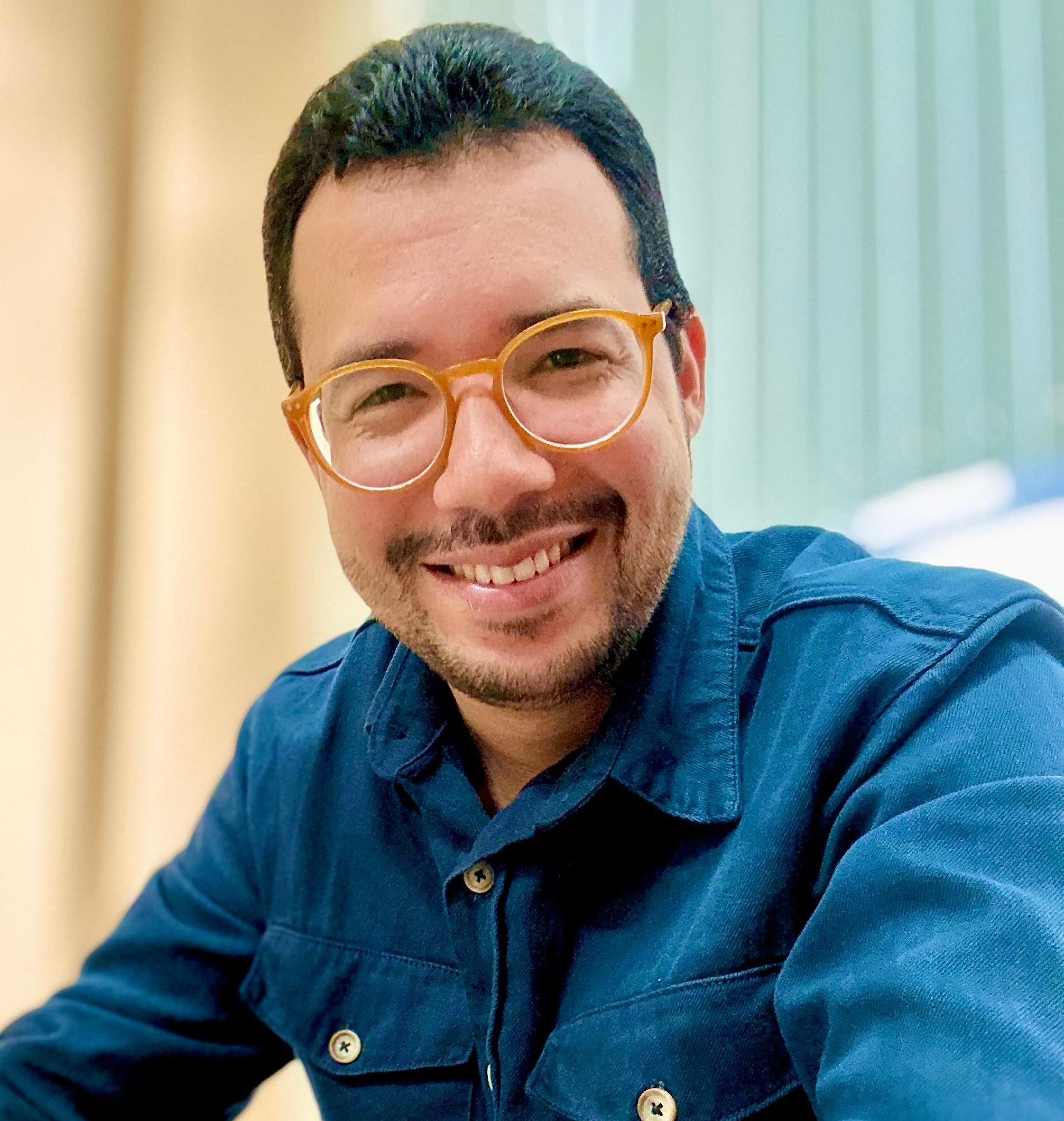
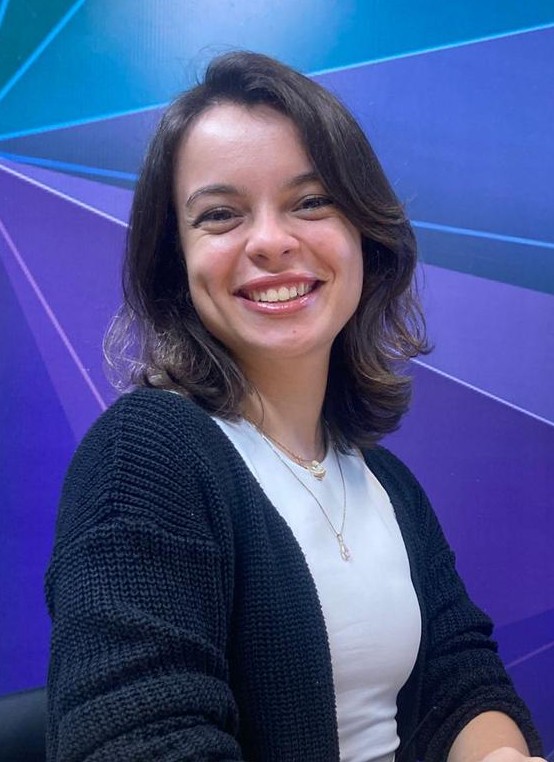
In 2024, in addition to student mobility, there was also a faculty technical visit to the VCU School of Education. As a result, we decided to interview our supervisor in the light of his experience with computational thinking and teacher education. This interview was conducted by the PhD Candidate Jefferson do Carmo and Dr. Simone Lucena, both from UFS, with Dr. Monty Jones, their supervisor at VCU. Dr. Monty Jones is a tenured professor at the VCU School of Education, and he advises graduate students and teaches courses focused on technology and education. Furthermore, he develops a research project in basic education schools with students who learned programming through music. Dr. Monty Jones is also a musician and incorporates his artistic influence into his classes.
In this interview, we understand that academic internationalization is also a cultural, social, and political exchange whose final product is always the sum of many learning paths and experiences, providing us with lasting impressions and the desire to continue learning and sharing knowledge with other people in our country. This is a narrative interview (Jovchelovitch; Bauer, 2002; Josselson, 2021; Zhang, 2023) that preserves the participant’s language as much as possible. Thus, we tried to maintain a natural flow in the transcription, where only truly necessary edits were made in terms of grammar and collocation. We set a plan with some guiding questions, but other questions emerged during the interview. As a result, we display herein an academic conversation that unfolds in a rhizomatic way, as we were all making meanings. In Figure 1, we introduce ourselves in order to bring a welcoming atmosphere. Take a seat, make yourself at home and enjoy our interview.
How to Cite
References
BRASIL.Parecer CNE/CP 2022. Ministério da Educação. Conselho Nacional de Educação. Normas sobre a computação na Educação Básica- complemento à BNCC. Brasília, 2022.
JOVCHELOVITCH, Sandra; BAUER, Martin W. Entrevista narrativa. In: BAUER, Martin W.; GASKELL, George. Pesquisa qualitativa com texto, imagem e som: um manual prático. Tradução de Pedrinho A. Guareschi. Petrópolis, RJ: Vozes, 2002, p. 90-113.
JOSSELSON, Ruthellen. Essentials of Narrative Analysis. Washington DC: American Psychology Association, 2021.
VALERO-RIBEIRO-SAES, Klarissa; INVERNIZZI, Noela. A política de internacionalização na pós-graduação brasileira: efetividade da mobilidade acadêmica para internacionalizar a produção científica e a colaboração internacional. Rev. iberoam. educ. super, Ciudad de México , v. 14, n. 41, p. 20-38, 2023. Disponible en <http://www.scielo.org.mx/scielo.php?script=sci_arttext&pid=S2007-28722023000300020&lng=es&nrm=iso>. accedido en 12 nov. 2024. Epub 05-Abr-2024. https://doi.org/10.22201/iisue.20072872e.2023.41.1579.
Zhang, Yue. L2 investment and Techno-reflective Narrative Interviews. TESOL Quarterly: invited research issues, p. 1–16, 2023.